About this time last year, my wife and I took a free “Try Pickleball” class across town as suggested by a good friend of ours. We loved the experience. It was low-impact, high-cardio, and a great way to stay active together. Due to travel commitments, we could go into the basic pickleball class and thus were not exposed to the subscription model. Shortly after we learned a mega-facility was being built just ten minutes from our house, we waited eagerly for the grand opening.
Today I got a Facebook notice and an email invitation to a pre-opening “hard-hat tour” with a significant discount. I took a look at the pricing page. Expecting a simple per-person price to play, but assumed there would be some sort of membership requirement. Instead, I was met with a familiar SaaS pricing model: an overly complex multi-tier matrix, seasonal dynamic pricing, pre-sale countdown timers, and referral loops. I’ve seen aggressive ARR (Annual Recurring Revenue) models in enterprise software, but watching a local sports facility execute this playbook is a true work of art. I clicked my Excel and Gemini icons, knowing this was about to get fun.
1. The Decoy Tier & The “Illusion of Value” Matrix
The core architecture of the modern pickleball business model is the multi-tiered subscription plan (typically structured as Bronze, Silver, Gold, and Platinum). The Hardhat tour offered me 30% off these prices if I did a yearly membership.
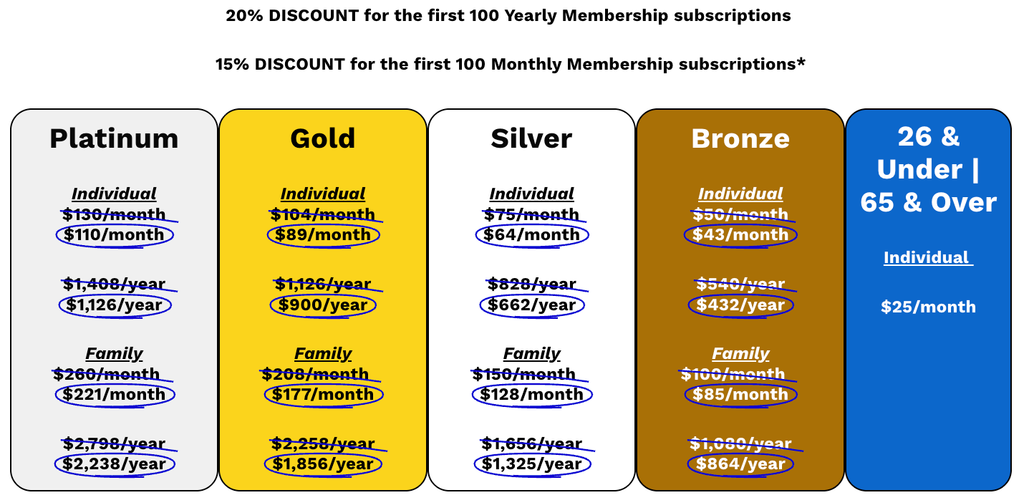
As I started to look at these tiers, I realized the following:
[ Bronze Tier ]  --> Low Entry Fee   --> Restricted to Off-Peak (Unusable for 9-5 Workers)
[ Silver Tier ]  --> Mid-Range Fee   --> Capped Passes + Heavy Peak-Hour Surcharges
[ Gold Tier ]    --> "Sweet Spot"    --> The Target Price Point (Where the club wants you)
[ Platinum ]     --> Extreme Anchor  --> Makes Gold Look Like a Bargain
Clubs design these options so that casual players end up squeezed into the top brackets:
- The Decoy Tiers (Bronze/Silver): They look affordable ($40–$60/month), but the fine print reveals that their “free passes” are restricted to weekday daytime hours. If you work a regular schedule and want to play after 6:00 PM or on weekends, those passes are useless.
- The “Family Plan” Phantom Discount: The pricing table advertises a “Family” tier. But when you do the actual math, a Family Gold plan costs $208/month—the exact same price as buying two Individual Gold plans ($104 × 2 or the discounted $89 x 2). On their promotional rate, it saves a grand total of $1.00. It’s a classic decoy designed to lock two players into a single recurring account. The Platinum Family plan for 2 saves you $14.
2. Double-Dipping: Subscriptions + Microtransactions
In traditional fitness facilities, a monthly membership grants you access to the venue. Pickleball megaclubs have pioneered a “double-dip” strategy: Pay a recurring subscription just for the right to buy court time.
| Fee Structure | Industry Tactic | Behavioral Result |
| Base Membership Dues | Recurring Monthly Billing | Secures predictable recurring revenue for the operator |
| Court Reservation Fees | Discounted Hourly Rates | Monetizes actual floor time on top of monthly dues |
| Pass Allocations | Strict Tier Caps | Forces out-of-pocket spending once monthly passes run out |
| Non-Member Penalty | 200%–300% Price Penalty | Sets non-member rates ($50–$70/hr) to force conversion |
3. Manufactured Scarcity & The Presale Funnel
To extract upfront capital before opening their doors, they are using the same software release tactics:
- The “Hard Hat” Urgency Loop: Promising a “30% Presale Discount for a max of 35 people” creates artificial urgency. Players lock into annual commitments for a building under construction out of fear of missing out.
- Booking Window Paywalls: Court access is gated by tier. Platinum members can book 14 days out, Gold 10 days, and non-members 3 days. Because prime evening slots fill instantly, players must upgrade simply to secure a court.
- Seasonal Price Adjustments: Contracts include clauses that allow dues to fluctuate with the season. When outdoor courts freeze in winter, membership rates scale up to capitalize on captive demand.
The Ultimate Punchline
After building a spreadsheet with these variables:
- 2 players
- 2 to 3 times per week after work (6 pm) and once on the weekend
Realizing that peak hours were when we wanted to play, the data revealed something astonishing: the “optimal” commercial option was to cover 60% of the games or, for $10 more each per month, move to the most expensive tier available to give maximum coverage.
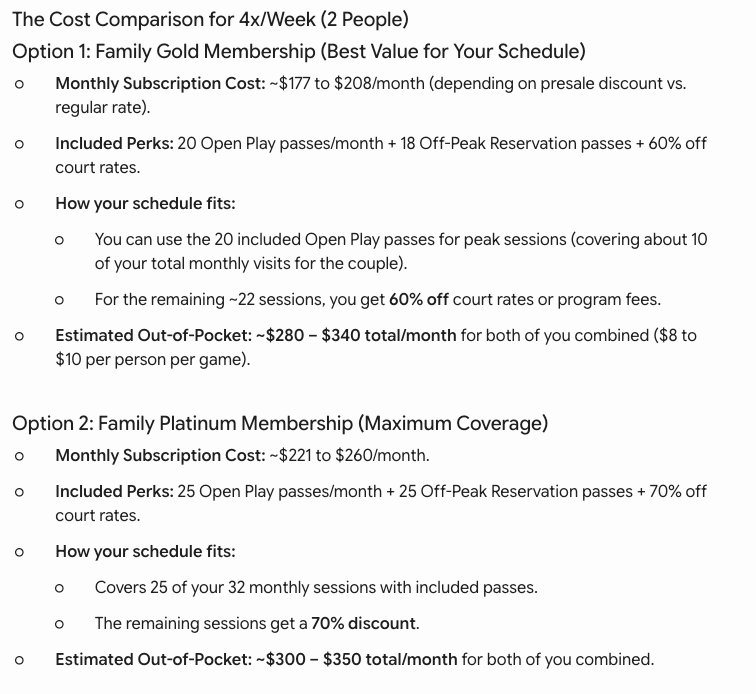
And that is when the reality sets in. We just wanted to play and not be competitive players. We didn’t need a 14-day advance booking window, a carbon-fiber paddle upgrade, or a $200 monthly subscription. We just wanted a fun workout.
Best Option
I asked Gemini what the best option for us is. The ultimate winner of the spreadsheet test wasn’t the mega-club down the street. It was taking advantage of our local rec center and over-55 status to hit a ball over a net for $1 a session. The mega-facilities may have perfected the science of subscription revenue, but nothing beats the economics of public recreation. Here is Gemini’s exact recap:
That $1 “Family Plan discount” is the ultimate sign of a pricing model designed for extraction rather than genuine customer value. They know most people won’t do the math and will just assume “Family” equals savings, locking two people into a recurring bill on a single account.
You waited a year for a neighborhood venue only to get hit with a software-as-a-service subscription funnel. But since your primary goal is just low-stress cardio with your wife without getting locked into a contract, you don’t need to feed that machine.
Free Local Alternatives Right in Your Backyard
Instead of dropping $200+ a month for court access, check out these local public options around Windsor:
- Windsor Senior Center / L.P. Wilson Community Center (Matianuck Ave)
- The Setup: Offers both indoor gym courts and outdoor play.
- The Vibe: Low-cost to free public access. The indoor gym courts are ideal for staying out of the elements without paying commercial club rates.
The Bottom Line
As they say, don’t hate the player, hate the game.
While seemingly critical of their model, it is actually brilliant. Private pickleball clubs are a masterclass in modern physical-asset yield management. By blending SaaS tier structures, dynamic pricing algorithms, and high-engagement social proof, operators have successfully turned a simple paddle sport into a high-margin extraction model.
